Large quantities microplastics and nanoplastics, are present in bottled water, according to recent studies, which "ring a bell" for the revision of packaging rules for water and other materials.
Speaking to Dnews, Ioannis Katsogiannis, Professor of Environmental Technology at the Department of Chemistry of the Aristotle University of Thessaloniki and President of the Union of Greek Chemists, notes that according to these studies, "the largest percentage of nanoplastics and microplastics found in the bottled water, come from the bottle itself and not from the water itself. This demonstrates that we have an issue with the bottles. There is no limit in case law on the concentration of microplastics in a bottle of water, because there is no certified measurement of such organisms, but there is also no direct evidence of a link between microplastics and certain diseases. There is evidence, of course, and that evidence is based on statistics and studies. That is, there is a study that reports that in people who developed lung cancer, in 97% of these cases, microplastics were found in the lung tissues. But this is not direct evidence that the microplastics cause lung cancer", says Mr Katsogiannis.
There will have to be more studies to verify the issue of nanoplastics in bottled water, but there are already many of them that do.
"The debate on the issue has been going on for a long time. How bottled water is preserved. From bottling, these waters go on pallets, to liquor stores and supermarkets and kiosks and then to the consumer. We can know how these were preserved, whether they were kept in a shady place, etc. In any case, with bottled products there is an issue that I think the state - and not only in Greece - finds it difficult to fully control," says Katsogiannis.
But what do we do, what is the solution? Because of course, we can't stop drinking bottled water and there's no reason to do so yet. When it's 40 degrees in Constitution Square, we can't stop drinking bottled water. Mr. Katsogiannis, proposes the installation of relevant activated carbon filters in the taps.
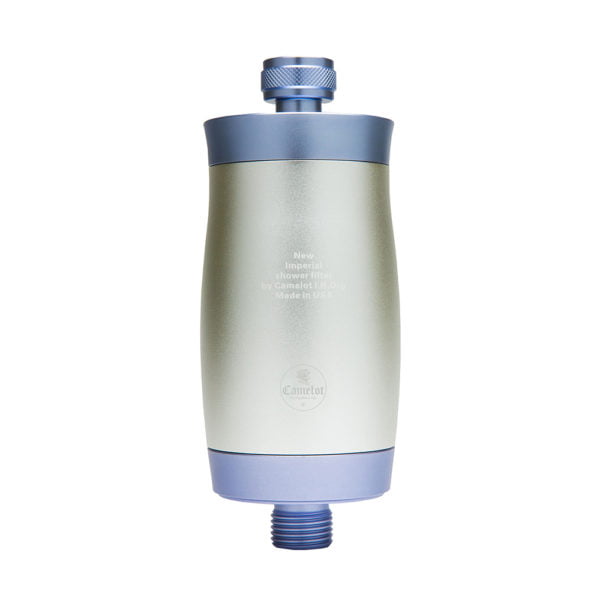
"At home, there are two things people usually do. One is that they don't trust the tap water. And I'm talking about big cities. The drinking water, it's very good quality. It's chlorinated and microbiologically safe and it doesn't contain toxic metals, because systematic measurements are done. There is legislation and it is respected. So what I recommend is an activated carbon filter with a stainless steel cap. This filter, will exclude the 90% of microplastics that the water may have. It will also remove the chlorine and particulates and we have a very good drinking water," he notes.
Also, the water we store in the fridge should not be in a plastic bottle, but in a glass bottle. We should not use the same plastic water bottle in the car. We should throw away the plastic bottles after use.
"The bottles indicate how they should be stored and under what conditions. But this cannot be checked until it reaches the consumer. A long time ago, water and soft drinks were only available in glass packaging, some such packaging still exists. I think we need to go back there, along with incentives from the state. Somehow we should get into this process, de-plasticisation, in line with the European Union as well. The biggest problem at the moment, which we are trying to figure out how to deal with, is nanoplastics and PFAS," says the president of the Union of Greek Chemists, citing as an example what is happening with the plastic straws we use in Greece.
Perfluorinated alkylated substances (PFAS), comprising over 4,700 chemicals, are a group of widely used man-made substances that accumulate over time in humans and the environment. These substances are also known as 'ubiquitous chemicals' as they are highly persistent when in the environment and in organisms. They can cause health problems such as liver damage, thyroid disease, obesity, fertility problems and cancer.